
The Wolfless Carpenter Rules the World - How to Watch for Free
Exiled by his own blood. Chosen by the Moon. Armed with an axe.
Advertisements
Raven came home looking for family. The Bloodshadow Tribe made sure he found a war instead.
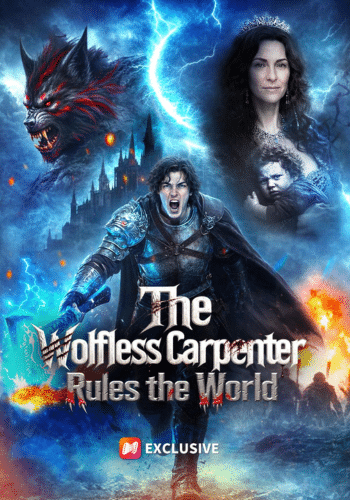
Series Information
- Title: The Wolfless Carpenter Rules the World
- Year: 2026
- Platform: NetShort
- Genre: Fantasy, Action, Underdog Rise, Karma Payback, Finding Relatives
- Format: Vertical short drama exclusive to NetShort, comprising 68 portrait-mode episodes produced for mobile-first streaming.
Synopsis
Raven does not return to the Redclaw clan with ambitions of power. He returns looking for something far simpler: his family. The exile he has been living through was not something he chose, and the years spent away from the place he was born have not made him cold or calculating. What they have made him is patient, and that patience is something the people waiting to dismiss him in the clan compound are not prepared for. His father, Marshall Redclaw, receives him without warmth. The clan that carries his bloodline looks at the man they sent away and sees exactly what they expected to see: someone who left, someone who does not belong, someone who can be set aside again without consequence. They are wrong about all of it, and the series takes its time letting that wrongness accumulate before it breaks into the open.
The disguise Raven operates under is not a costume he put on deliberately. It is the identity the world assigned him when his own clan decided he was not worth keeping. He works as a carpenter. He presents himself as someone without rank, without power, without any claim to anything the people around him would recognize as significant. That presentation is accurate in the narrow sense that Raven genuinely has no interest in asserting his lineage or demanding recognition for it. What it completely fails to capture is what he is actually capable of, which becomes apparent the moment the Bloodshadow Tribe arrives and the situation in the clan compound changes from political tension to immediate physical threat.
The Bloodshadow Tribe is not a minor antagonist the series dispatches quickly to clear space for interpersonal drama. It functions as a sustained external pressure that forces every character to reveal what they are actually made of under conditions they did not choose. Raven's hidden power, channeled through a magic axe that responds to his specific lineage, manifests in the most public possible way during the invasion. He does not simply fight well. He fights in a way that carries unmistakable supernatural weight, wielding moon-derived abilities that announce his true nature to anyone paying attention. The king of the region, who previously had no reason to look twice at a traveling carpenter, finds himself watching a man in combat who cannot be what he claims to be.
The princess enters the story through chaos rather than through ceremony. Her arrival at the tavern sets the pace of the early episodes at a speed the series never really eases off of. Raven's decision to protect her is not calculated. It is the response of someone who acts before he has time to consider the political implications of getting involved, which is part of what makes him a compelling protagonist for this format. He does not perform heroism. He simply responds to what is in front of him. The connection that develops between them is built on that initial dynamic, where she has seen what he is capable of before anyone has given him a title or a position that would make his capabilities legible to the world around them.
What the series handles with particular care across its 68 episodes is the question of why Raven declines the crown when it is offered to him. The old king extends the offer sincerely, recognizing in Raven something that deserves formal acknowledgment. Raven turns it down, and the reason is not false modesty or political strategy. His priority is the family he came back to find, the relationships that were severed when he was exiled, the personal truth that has been waiting for resolution longer than any military campaign. That choice, placing belonging above authority, is what distinguishes him from the standard underdog protagonist who is ultimately motivated by the desire to claim what was always rightfully his. Raven wants something simpler and harder to obtain than power, and the series treats that distinction seriously.
For a 68-episode vertical short drama on NetShort, the series manages a scale that most titles in the format cannot sustain without losing coherence. The world-building operates on multiple simultaneous levels: the internal dynamics of the Redclaw clan, the external threat from the Bloodshadow Tribe, the political implications of Raven's revealed identity across multiple royal households, and the Moon Goddess mythology that anchors the magic system. Each of these layers receives enough attention to feel constructed rather than borrowed, and the pacing across the episode arc gives each confrontation room to land without rushing past the emotional weight of what just happened. The white pendant, the graveyard scene one year after the central conflict, the specific dialogue that runs through the series' climactic episodes — these details reflect a production that was designed with the full arc in mind rather than assembled episode by episode.
Fascinating Curiosities About the Series
- The title contains a deliberate paradox that the series unpacks across its full episode count. A wolfless person in a werewolf clan world would typically be defined by absence, by what they lack rather than what they carry. The series inverts that framing entirely: Raven's lack of wolf form is not the source of his limitation but the thing that forced him to develop something the clan's hierarchy never anticipated. What he wields is not wolf power. It is older, and the title's promise that this wolfless man will rule the world is the series' central structural argument.
- The magic axe Raven uses in combat is not a weapon he acquired or was given as a gift. It responds to his specific lineage, which means it is a revelation as much as a tool. When it activates during the Bloodshadow Tribe invasion, it publicly identifies Raven's bloodline in a way that no amount of careful concealment as a traveling carpenter could survive. The axe does not give him power. It recognizes the power that was already there, which is a distinction the series builds its identity reveal around.
- The "Lunar Punishment" combat move, which generates blue energy effects against dark skies and was consistently cited in viewer responses as the series' most visually striking sequence, represents a production decision to invest disproportionately in a single signature visual rather than spreading the effects budget evenly. That choice reflects an understanding of how short drama clips travel on social media: one extraordinary visual, repeated across platform compilations, functions as a more effective promotional asset than consistent mid-tier production quality across all 68 episodes.
- Marshall Redclaw's death and the graveyard scene that follows one year later are the emotional axis the series builds toward rather than a climax it rushes past. The glowing pendant placed on the tomb, the mourning figures in contrasting costumes, and the specific dialogue between the brothers at the grave carry a thematic weight that reframes the entire preceding arc. What began as a story about a son rejected by his father ends at a grave where the son is the one holding the lineage together, which is the series' most quietly devastating structural reversal.
- The Bloodshadow Tribe's role in the narrative goes beyond providing combat sequences for Raven to win. The invasion creates the conditions under which every relationship in the clan is stress-tested simultaneously. Loyalties that seemed fixed shift. Characters who dismissed Raven are forced to observe what he is capable of in real time. The tribe does not simply threaten the clan's physical survival. It dismantles the social order that justified his exile, making it impossible for the people who cast him out to maintain the fiction that they made the right call.
- Raven's refusal of the crown when offered by the old king is one of the series' most discussed moments among viewers, specifically because it breaks the genre's standard wish-fulfillment arc. The conventional underdog narrative in fantasy short drama builds toward the protagonist claiming the throne, the title, or the position that was always rightfully theirs. Raven walks away from the offer, and the series frames that choice not as sacrifice but as clarity about what he actually came back for. That departure from formula is what gives the character his distinctiveness within a genre that rarely allows its male leads to want something other than dominance.
- At 68 episodes, this series sits at the longer end of NetShort's fantasy action catalog, and the production made specific structural choices to justify that length. The Finding Relatives genre tag, which appears alongside Underdog Rise and Karma Payback in the series' official categorization, signals that the emotional core of the story is not primarily the combat or the power reveals but the question of whether Raven can rebuild the family connections that were severed by his exile. That personal objective, running beneath the supernatural conflict, is what gives the series its emotional throughline across episodes that might otherwise feel like disconnected action sequences.

Diana Foster is an entertainment writer specializing in action-romance hybrids and digital platform storytelling. With a background in genre fiction analysis, she covers the growing intersection of adrenaline-driven plots and romantic arcs in short-form series. Her reviews focus on pacing, production value, and what makes mobile-first content irresistible to global audiences.
The content on this page is published for informational and entertainment purposes only. All intellectual property rights associated with The Wolfless Carpenter Rules the World, including its story, characters, title, and all related creative elements, belong exclusively to the original production team and the NetShort platform. Viewers who wish to watch the complete series are encouraged to access it through NetShort's official app or website, where the creative team receives proper attribution and compensation for their work. This site operates as an independent review and recommendation platform for short drama audiences and holds no affiliation with NetShort or any party involved in producing this title. All reviews and articles published on this site are free to read. No payment, subscription fees, or personal financial information are ever required to access our content. We do not host, stream, distribute, or store any copyrighted video material. Our purpose is to help audiences find quality short drama content through honest, specific critical writing. To watch the full series and support the people behind it, please visit NetShort through their official channels.